ParentWonder

Helping Parents Succeed

  • Home
  • Popular Posts
  • Archives
  • Contact
  • Guide
  • Search

How to display family digital photos without printing them

August 10, 2007 By Abel Cheng

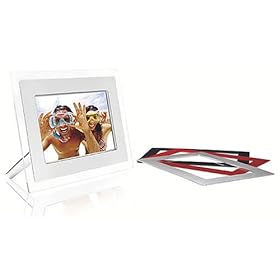
digital photo frameDigital cameras are everywhere. Even cell phones can be used to snap photos.

The side effect of this amazing technology is we don’t have the chance to display the photos – each and every one of them.

Reasons?

1) Too lazy to send them for printing.

2) Don’t know which pictures to print. I have hundreds of them, if not thousands.

To be fair, even though we’d have printed them all, where do we hang them? Our little house has definitely insufficient space. Never mind about the costs.

Worry not, there’s a solution. We can solve this by using one of the many digital photo frames.

You upload a collection of digital photos to the memory of the digital photo frame. The pictures are displayed automatically and changed based on a time interval set by you.

Isn’t that cool? Now you can display all your photos with just one photo frame.

A quick check at Amazon.com reveals that the price range is from $70 to $200. Sounds expensive but this seems like a more practical solution.

Not only that, digital photo frame makes a perfect gift too.

[Read more…]

Filed Under: Blog

Preventing Dehydration in Children – 15 Simple and Inexpensive Ways

August 9, 2007 By PW Editorial Team

When weather gets hotter, the more your child perspires and the chances of getting dehydrated are higher. Dehydration is a condition in which children lose too much water (through sweating and urinating) and they fail to replenish these losses.

Symptoms of Dehydration

  • Thirsty
  • Loss of appetite
  • Headache
  • Cry without tears
  • Increased heart rate
  • Pallor
  • Dizziness
  • General flu-like feeling (sometimes nausea and vomiting)
  • Diarrhea
  • A dry mouth
  • Lethargy
  • Reduced frequency of urination
  • Sunken eyes

Dehydration, if left untreated, can lead to heat exhaustion, a rise in body temperature.

If you see serious symptoms like vomiting for more than 24 hours, sunken eyes, or wrinkled skin, seek medical help immediately.

However, the good news is dehydration is 100% preventable.

Here are some practical tips to prevent your child from being dehydrated this summer:

1. Wear light colored clothes. They reflect the heat. Dark colors absorb heat. Choose the proper color for your child to wear outdoor.

2. Drink plenty of water. Water is still the best drink. It should be taken a little at a time, not gulped down. Apart from staying hydrated, here are the 9 reasons to drink water and how to form the water habit. Having problems getting your toddler to drink water? Check out this little trick.

3. Avoid the sun. Obviously, the best is to stay away from the sun. Schedule your activities either in the morning or late afternoon. Avoid being in the sun during the hottest period of the day.

4. Acclimate to the heat slowly. Let your child exposed to the heat gradually. Don’t stay in the sun for too long. Start from a few minutes and then increase slowly to a longer period.

5. Make your own fan. Use a book, newspaper, paper plate, or picnic tablecloth to keep your child cool. Better still, carry a small battery-operated fan.

6. Eat more fruits and vegetables. They contain a fairly high water content – to replenish water losses – and minerals too. Tip: Getting kids to eat vegetables and fruits.

7. Slow down. If your child is doing something under the sun, do it slower than the usual pace.

8. Wear a hat. To protect from the sun, give your child a hat to wear. Preferably one that covers the neck and well ventilated, such as fisherman’s hats or straw hats.

9. Check the weather. If the weatherman says it’s going to be a hot day, stay away from outdoor activities and let your child have fun indoor instead.

10. Don’t bear your chest. It’s not sexy to bear your chest in the heat of summer. Your child picks up more heat if he’s shirtless.

11. Wear cotton and polyester blends. This combination breathes better than 100% cotton or nylon.

12. Carry spare clothes. If your child’s shirt gets wet, change it immediately.

13. Cool off with water. Spray or splash your child with water to cool off. It’s a fun game too for the summer.

14. Bring an umbrella. If you child doesn’t like to wear a hat, let him carry a child’s umbrella or you carry for him when you go out.

15. Go to a mall. If you don’t want to foot the electricity bill, go to a nearby air-conditioned mall to enjoy the cool air there — for free. Make sure there’s something for the kids to keep them occupied.

Other useful resources:
Dehydration in Children Causes, Symptoms, Diagnosis, and Treatment
Dehydration in Children Treatment

[Read more…]

Filed Under: Parenting

Humor: Baby Maybelline

August 9, 2007 By Abel Cheng

Many say parenting is tough job.

Don’t take it too seriously and give yourself a break by watching this hilarious video.

"Mommy caught naughty Baby Maybelline red-handed going through her make up drawer. The kid got powder, eye shadow, and lipstick all over her face. Sitting on the floor in her mess, singing her sad song, the brat wonders how mom’s going to punish her this time."

Poor Maybelline…wonder what will her mother get her after this.

Watch: Baby Maybelline

[Read more…]

Filed Under: Blog

MRI scans might prevent breast cancer, study shows

August 9, 2007 By PW Editorial Team

MRI scans may offer a new way to detect breast cancer at its earliest stages and perhaps even prevent cancer among high-risk women, European researchers said on Thursday.

Details of a German study show that magnetic resonance imaging was better than standard mammograms, a type of X-ray, at detecting a nonmalignant tumor called ductal carcinoma in-situ, or DCIS.

This could give surgeons time to remove the lesion before it can turn cancerous.

The findings, published in the Lancet medical journal, suggest that MRI should be tested in more women to see if it should become a standard screening tool, said Dr. Carla Boetes and Dr. Ritse Mann of the Radboud University Nijmegen Medical Centre in the Netherlands.

Full report: Reuters
[Read more…]

Filed Under: Health and Fitness

10 Ways to Help Your Child Connect With the Natural World

August 7, 2007 By Tiffany Washko

When I think back to some of the best memories of my childhood, many of them revolve around the natural world. In my youngest years I recall learning to ride a horse, spending countless hours in a barn rounding up kittens, and building up the courage to follow them up the barn ladder into the hay loft. As I got older I remember riding horseback for hours at a stretch, trekking through cornfields, and sitting through school with the desperate thought I that when I went home I would spend every minute until supper time outside adventuring.

When I look around today at children I am alarmed by the number of them that have almost no connection with the natural world. They don’t run and play in the fresh air….they stay indoors playing video games, watching television, or talking on cell phones that might have received for their fifth birthday. Nature is a curiosity and not the source of wonderment and complete abandon that is was for me. With every generation we seem to place less value on our relationship with nature. The “fun” in childhood seems to be disappearing at an alarming rate. Back when my mom grew up there was summer camp that involved sleeping in a cabin with other kids, swimming in the lake, and telling stories by camp fire. I looked at a camp directory in my area recently and saw a weight loss camp, an Asian languages camp, and an ethnic sensitivity camp. All of these “camps” were conducted indoors.

One of my foremost concerns as a parent is to make sure my children get to experience nature as I did and to guard against the development of nature deficit disorder.

The importance of this is evident in the book Last Child in the Woods – Saving Our Children from Nature Deficit Disorder by Richard Louv. The book explores the increasing divide between the young and the natural world, and the environmental, social, psychological, and spiritual implications. It also shows us how important that connection is for child and adult health. It shows how the absence of nature in the lives of today’s wired generation can be linked to some of the most disturbing childhood trends: obesity, attention disorders, and depression.

So what can you do to cultivate within your child a natural and long lasting understanding of and connection with the natural world. Here are 10 suggestions to help you get started:

1. Connect with nature in your own backyard. Sit on the ground outside with your kids and have them describe what they see….the colors, the sounds, etc. Make a mud pie, fly a kite, or collect bugs to observe. If you do not have a yard, make it a family project to bring nature indoors with house plants, a fountain, a recording of nature’s sounds.

2. Built a fort or a tent outside for your kids. Even if it just a sheet thrown across a clothesline, give them a secret place for them to play outside and let their imaginations create hundreds of outdoor adventures.

3. Go camping. There is no greater way to experience nature then to go camping. You can sleep in a tent or in a sleeping bag under the stars, cook your food by campfire, and share stories with other campers.

4. Regularly visit botanical gardens. Most large cities have botanical gardens to showcase the native species of plant life available in your region. It is a great way for kids to learn about the types of plants that thrive in your region of the world.

5. Take your kids on a tour of a working farm. Many farm tours are geared toward kids allowing them opportunities to feed animals and do some actual farm chores. Some farms have Pick-Your-Own programs where you get to harvest your own food. This is also a great way for kids to identify with the process that brings food to their plates every day.

6. Go on a nature photo safari. Take your kids to a park or garden and allow them to become amateur photographers, taking pictures of all their natural finds. When you are finished collecting pictures turn them into a collage or photo slideshow. Here is an example of one such slideshow from YouTube of a natural backyard habitat.

7. Build a birdhouse with your children and put it in your yard to attract birds. Have them keep a record of all the birds you see and try to identify each of them.

8. Create a children’s garden. The book Roots, Shoots, Buckets and Boots has many ideas for garden projects that kids are sure to love such as a sunflower house and a pizza garden.

9. Start a compost bin inside or outside the home. Show them how kitchen scraps, paper, fallen leaves, and weeds can be used to create dark rich soil and how something that comes from the earth returns to it. Make it fun too. Roots, Shoots, Buckets and Boots gives instructions for making a compost sandwich. You can also buy some red earthworms and create a worm farm in your compost. All of these activities give your children hands on experience with nature and they absorb valuable information at the same time.

10. Read books to your children that encourage a curiosity in nature and the natural world. Barefoot books is a great place to look for books along these lines. They have many stories that incorporate natural themes. A Forest of Stories for example is a book my children really like that tells the story of seven magical trees from around the world including the Kapok tree, the Cherry Blossom tree, and the Palm tree. These trees were around long before man and in a sense are our living ancestors. We have a relationship with them now that is strikingly unfair as we accept from them a multitude of gifts and we often give nothing in return. It goes on to show us all of the gifts that trees give us and why they should have a special place in our lives and hearts.

Tiffany is a freelance writer and a “natural” mom to three wonderful kids. One of her foremost concerns is the state of the environment and making sure that she and her family live with a light ecological footprint. She’s a cancer survivor and the experience has taught her there is nothing more important than living naturally and healthfully. Visit her blog at Nature Moms.

Filed Under: Parenting

« Previous Page
Next Page »

Copyright © 2026 · ParentWonder.com · Design By Brian Gardner · About